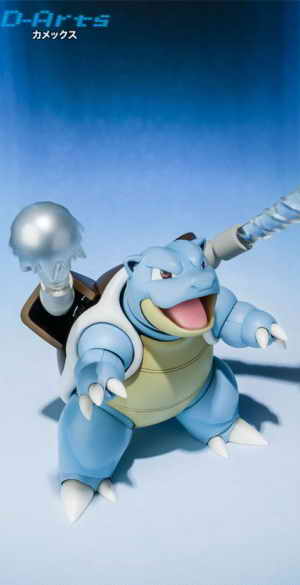
Pokémon - Figures
Figures from the Black & White stage
148 figures 5 groupsPaused collection
Paused collection · figures and Black & White cards
The collection remains paused / a closed stage. A clear separation is kept between the hub, figures and five card pages so navigation does not turn into one enormous gallery.
Because of my age, the first cards I was able to buy were from Black & White; from that point on, I kept buying the expansions.

Subcollections
Each block keeps its own route and avoids a single oversized gallery.
Figures from the Black & White stage
148 figures 5 groups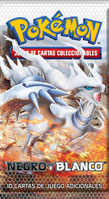
Documented Black & White card stage.
115 cards 4 boosters
Emerging Powers expansion preserved with cards and boosters.
98 cards 4 boosters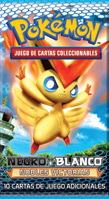
Noble Victories expansion preserved with a note about image 101.
101 cards 4 boosters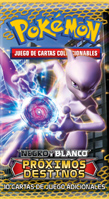
Next Destinies expansion with regular cards, secret cards and boosters.
103 cards 4 boosters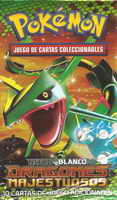
Dragons Exalted expansion preserved as the close of this stage.
124 cards 4 boostersGame notes
Pokémon is a game in which players take the role of Pokémon Trainers and put their Pokémon teams to the test in one-on-one or paired battles, much like in the video games. The aim is to Knock Out 6 of the opponent's Pokémon, or leave the opponent with no Pokémon or no cards in the deck so the battle cannot continue. Each player uses a deck of exactly 60 cards made up of any combination of Pokémon, Energy and Trainer cards, provided that no card with the same name appears more than 4 times.
Each player's play area consists of: Active Area: This is where the Pokémon currently battling are placed; these are referred to as Active Pokémon. There may be one or two positions for Pokémon depending on whether the battle is a single or paired match. Bench: This is where Pokémon wait when they are not currently battling. It can hold five or four Pokémon depending on whether the match is single or paired. Deck: The area where cards that have not yet been drawn are kept. Discard Pile: Any card that has finished serving its purpose, or any Pokémon that has been Knocked Out, goes to the discard pile. Prize Cards: The area where cards set aside as prizes at the start of the game are kept. There are 6 positions, one for each opposing Pokémon that must be Knocked Out. Each time we Knock Out an opponent's Pokémon, we take one Prize card. When we take the sixth, we win the game.
Setting up the game: Each player draws 7 cards at the start of the game. If a player has no Basic Pokémon in hand, they must reveal this to the opponent, shuffle the hand back into the deck and draw a new hand; the opponent may draw one additional card. This process is repeated until both players have a Basic Pokémon. Each player then chooses as many Basic Pokémon as desired from their hand and places them in the play area, first in the Active Area and then on the Bench. A coin is flipped after the players choose heads or tails, and the winner decides whether to start the game or give the first turn to the opponent. Once the first player has been decided, both players reveal the face-down Pokémon in their play areas and the game begins. Remember that the player who goes first cannot use Trainer cards during the first turn.
A game turn follows this sequence:
• Start of turn – Resolve effects that occur at the start of the turn.
• Draw – The active player draws one card from their deck. If they cannot draw because no cards remain, they lose the game.
• Main phase: During this phase the player may perform the following actions: ◦ Attach an Energy card from their hand to a Pokémon. (Once per turn)
• Retreat the Active Pokémon. (Once per turn)
• Put Pokémon from the hand onto the Bench.
• Play Trainer cards.
• Use Poké-Powers or Poké-Bodies.
• Evolve Pokémon (only if the Basic Pokémon did not enter play this turn).
• Attack: During this phase the player may decide whether their Pokémon attacks the opponent; if it does, the effects of the chosen attack are resolved.
• End of turn – Resolve effects that occur at the end of the turn.
There is also a between-turns step in which effects that occur between turns are resolved, most commonly Special Conditions.
There are 3 main types of cards in the Pokémon game, each with several subtypes. Pokémon:
• Basic
• Evolutions
• Stage 1
• Stage 2
• Level-Up
Energy:
• Basic
• Special
Trainers:
• Supporters
• Stadiums
Pokémon remain in play and can gradually become stronger by evolving and leveling up. Their powers can alter the rules of the game, and their attacks damage the opponent's Pokémon and may even cause Special Conditions such as Burn or Confusion. Energy is what Pokémon use to attack. To perform an attack, a Pokémon must have the Energy shown in that attack attached to it and must meet any other requirement specified by the attack. Energy is also required to retreat Pokémon from battle; in that case, the player discards as much attached Energy as the Pokémon's Retreat Cost requires. These are the only cards for which an unlimited number of copies of the same card is permitted. Trainer cards can be played at different times and have many functions, from helping Pokémon and searching or drawing cards from the deck to changing conditions in the play area.
Special Conditions can be caused by certain attacks and affect Active Pokémon. Some remain in effect, while others can end after a successful check. Any Pokémon that retreats to the Bench is automatically cured of any Special Condition it was suffering from. The conditions are: Asleep: The Pokémon cannot attack or retreat. Duration: until the Pokémon gets heads on the check to wake up (at the start of each turn). Paralyzed: The Pokémon cannot attack or retreat. Duration: until the end of the next turn of the player whose Pokémon has the condition. Poisoned: The Pokémon takes one damage counter during each between-turns step. Duration: permanent. Burned: The player whose Pokémon has the condition flips a coin during each between-turns step; on tails, the Pokémon takes 2 damage counters. Duration: permanent. Confused: Whenever the Pokémon tries to attack, the player whose Pokémon has the condition flips a coin; on tails, the Pokémon takes 3 damage counters. Duration: permanent.
Criteria